|
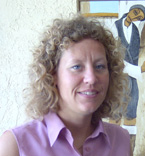
Sofia Modigh has during the last fifteen years been involved in alcohol- and drug preventive issues in Sweden, on local and national levels. She has worked professionally both in the voluntary sector and in the public sector.
1997 she was, from the Minister of Public Health and Social Affaires, Margot Wallström, given the challenge to develop actions at the Internet to balance the glorification of drugs. Together with voluntary organisations, national and local authorities the Drugsmart web was developed, targeting teenagers/student, teachers and parents. She was during the project employed at the Ministry of Public Health and Social Affairs as Adviser for questions related to substance abuse and internet.
Since 2003 she works as Head of Drug policy at IOGT-NTO, the Swedish temperance movement. And on voluntary bases she is the president of NBV, the Sobriety Movements Adult education association.
During 1999-2003 she was the vice president in the national board of IOGT-NTO, the Swedish temperance movement and during 1993-1997 she was the president of the Swedish Youth Temperance Organisation.
She has also worked at the Swedish Council for Information on Alcohol and Other Dugs (CAN) as editor for www.drugsmart.com
Sofia Modigh, Drug Policy Co-ordinator IOGT-NTO, Sweden
Address to the ECAD 11th Mayors' Conference
Cyprus
May 20-21, 2004
“Drugs in Cyber Space” – A summary
The PowerPoint Presentation is available through ecad@ecad.net
Background
A specific situation in Sweden in 1997 caused a public debate about the viability of drugs at the Internet. The Ministry of Public Health and Social Affairs therefore initiated a project to evaluate the situation and to prepare actions.
The situation ended up in a drug preventative project at Internet. In practice it started in 1998 and has since then been running.
The management of the project and at the same time the editorial office of a web site
( http://www.drugsmart.com)
was during the first three years placed at the Ministry of Public Health and Social Affairs and manned by Sofia Modigh and Mia Sundelin, both with background in different voluntary organisations working in the alcohol- and drug prevention field.
The project is today placed at the Swedish Council for Information on Alcohol and other Drugs and is manned of new employees.
Important questions
What’s out there? (In cyberspace.)
How do young people (in Sweden) use the Internet?
Is it possibly, at the Internet, to prevent young people from using Internet as a catalyst for experimenting with drugs?
The work
Surfing the Net.
Analyse the underlying messages.
Study the interactivity.
Evaluate the impact.
(A PowerPoint presentation with examples is available through ecad@ecad.net )
Conclusions
Internet offers an open drug scene.
At the Internet the term “drugs” are used for al kinds of substances - narcotics, alcohol, doping, medicine, tobacco etc.
The discussions and debates at the Internet differ from the public discussions and debates.
The connection between for example drugs, pornography, violence and weapons are clear.
Almost no adults know about “the drug part” of the Internet.
Prevention at Internet can be done!
[< Back]
|